Curated by Aleksandra Artamonovskaja
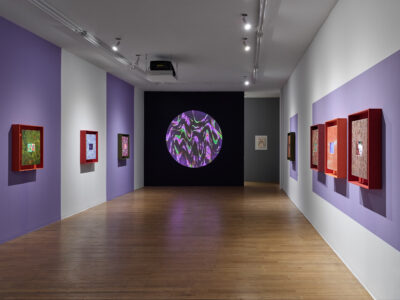
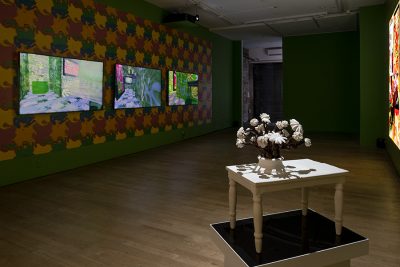
Code Chronicles V.2 brings together artists Claudia Hart, Libby Heaney, Seo Hyojung, Ellie Pritts, Emily Xie, and Addie Wagenknecht in an exploration of how generative processes and artificial intelligence are reshaping artistic production. Extending Artamonovskaja’s inquiry initiated in the 2023 exhibition Code Chronicles—which considered the ways algorithmic structures sustain and reinterpret visual continuity—this iteration shifts attention toward more entangled dynamics. Here, computational systems are not simply tools but active participants.

Code Chronicles V.2 brings together artists Claudia Hart, Libby Heaney, Seo Hyojung, Ellie Pritts, Emily Xie, and Addie Wagenknecht in an exploration of how generative processes and artificial intelligence are reshaping artistic production. Extending Artamonovskaja’s inquiry initiated in the 2023 exhibition Code Chronicles—which considered the ways algorithmic structures sustain and reinterpret visual continuity—this iteration shifts attention toward more entangled dynamics. Here, computational systems are not simply tools but active participants.
Across generative systems, conceptual frameworks, and image-based practices, the works in the exhibition reflect an ongoing negotiation with digital materiality and evolving systems of creation. Rather than offering conclusions Code Chronicles V.2 operates as an open-ended platform for coded artistic language that is still being written, revised, and expanded. Invited artists present a series of works in both digital and physical forms, inviting the viewer to navigate shifting boundaries between human intention and machine autonomy. Through immersive environments, algorithmic processes, and speculative narratives, the exhibition foregrounds moments of friction, collaboration, and co-authorship that define contemporary artistic practice. The exhibition is presented in collaboration with Art on Tezos.
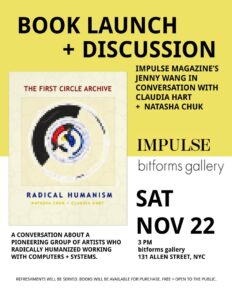
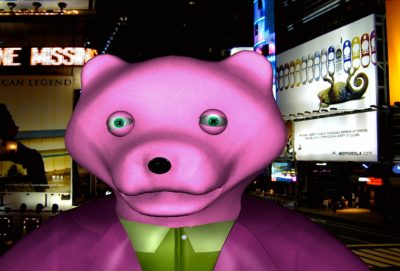
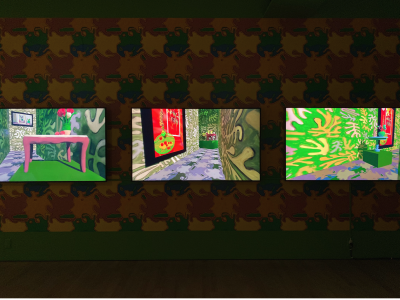
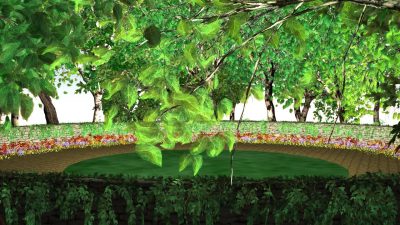
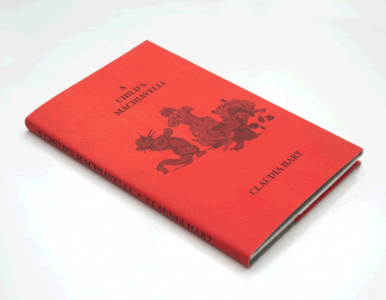
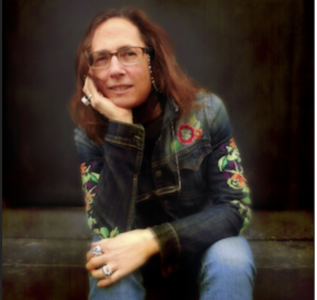
Claudia Hart emerged as part of a generation of ‘90s intermedia artists examining issues of identity and representation. Since the late ‘90s when she began working with 3D animation, Hart embraced these same concepts, but now focusing on the impact of computing and simulation technologies. She was an early adopter of virtual imaging, using 3D animation to make media installations and projections, and later as they were invented, other forms of VR, AR, and objects produced by computer-driven production machines. At the School of the Art Institute of Chicago, where she is a professor, she developed a pedagogic program based on her practice – Experimental 3D – the first dedicated solely to teaching simulations technologies in an art-school context.
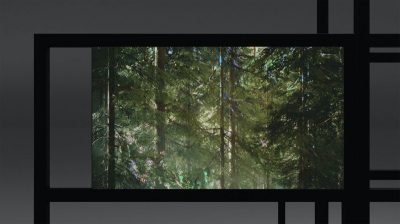
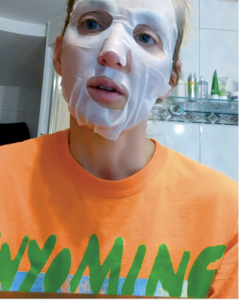
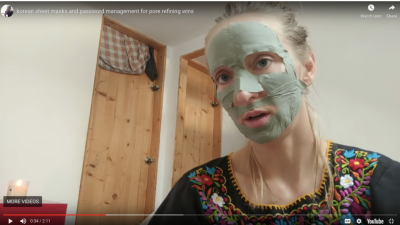
Libby Heaney works with quantum materiality to unsettle the conditions through which meaning, time, and perception are ordinarily stabilised. She is recognised as the first artist to use quantum computing as a fully functioning artistic medium, beginning this work in 2019. Her practice moves between glass, watercolour, performance, print, sound, video and computational systems including AI and quantum technologies, treating these not as tools of representation but as sites where coherence can fail. Across her practice, Heaney asks how quantum materiality can help us rethink the conditions of past-present-future and resist the urge to resolve uncertainty into stable worlds, staying instead with relations that remain shifting, entangled, and unfinished and how this affects human, nature and machine.
Seo Hyojung (also known as Seohyo) is a South Korean artist practicing different forms of installations and performance-based works by combining common everyday objects with media technology to render them unfamiliar, allowing us to perceive ordinary things in new ways. During the pandemic, she established herself as a generative artist through LOoP LoOP: Every Day is a Code, a daily coding project in which she uploaded a new coded work each day. Drawing inspiration from mathematical principles and the natural world, she is currently experimenting with reimagining urban digital billboards as more than large screens, recasting them as expanded architectural devices that interact with their surroundings to generate visual flows.
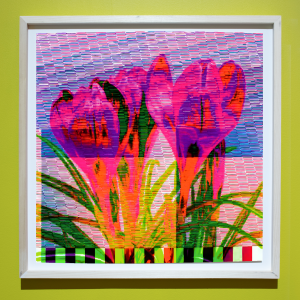
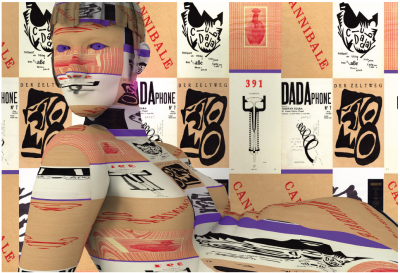
Ellie Pritts is a new media artist whose work traverses physical and virtual space, merging analog and digital processes into immersive explorations of biology, perception, and transformation. Drawing from photography, video synthesis, experimental animation and code, her practice is deeply shaped by lived experience with the rare genetic disease DADA2, cultivating a methodology that embraces technological experimentation alongside embodied slowness.
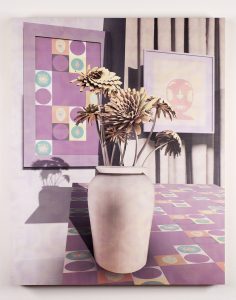
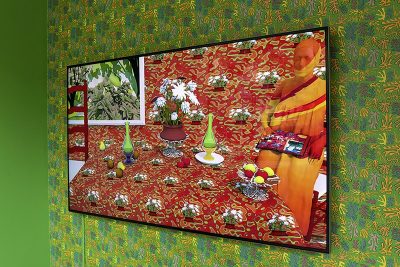
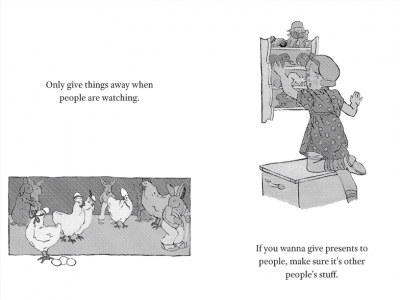
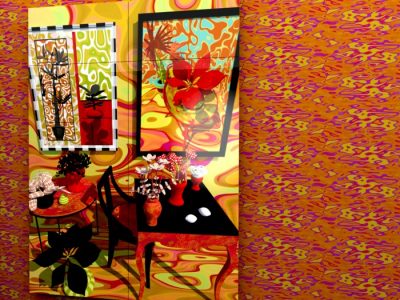
Emily Xie is a New York City-based artist working at the intersection of computation and visual culture. Drawing from physical media like textiles, collage, and wallpaper, she uses computation to build layered digital imagery replete with forms and patterns that feel at once familiar yet transformed. Her work situates these influences within a technological context, weaving together patterns and surfaces that carry themes of mythology, memory, tradition, and heritage.
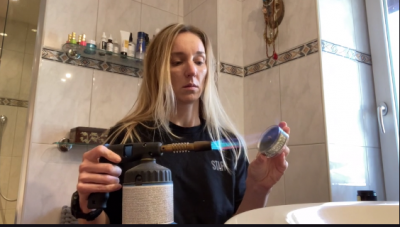
Addie Wagenknecht is an American artist based in Austria whose work explores the tension between expression and technology. Blending conceptually driven painting, sculpture, and installation with the ethos of hacker culture, Wagenknecht constructs spaces between art object and lived experience. Here, the darker side of systems that constitute lived reality emerge, revealing alternative yet parallel realities. In the context of post-Snowden information culture, Wagenknecht’s work contemplates power, networked consciousness, and the incessant beauty of everyday life despite the anxiety of being surveilled. A member of Free Art & Technology (F.A.T.) Lab, Wagenknecht was the recipient of a 2014 Warhol Foundation Grant, which she used to found Deep Lab, a collaborative group of researchers, artists, writers, engineers, and cultural producers interested in privacy, surveillance, code, art, social hacking, and anonymity. As an active leader in the open source hardware movement, she also co-founded NORTD Labs, an international research and development collaborative with Stefan Hechenberger, which produces open source projects that have been used and built by millions worldwide.Aleksandra Artamonovskaja is a curator and cultural strategist working at the intersection of contemporary art and digital technologies. Her practice focuses on contextualising and institutionalising digital art within emerging ecosystems through global exhibitions, public programming, and cross-sector partnerships. As Head of Arts at Trilitech, she develops curatorial frameworks across the Tezos blockchain, shaping how digital works are presented, circulated, and collected. Her previous curatorial work includes the first iteration of Code Chronicles and collaborations with Ars Electronica’s Digital Pavilion. She is also co-founder of the curatorial and advisory studio Electric Artefacts. Across her practice, Artamonovskaja approaches curation as a form of context-building by bridging artistic production, technological infrastructure, and cultural discourse.